Sketch or rough drawing
We identify fabric, pattern, trim, measurement, and construction questions.
How it works
We review the style first, then clarify fabric, trims, workmanship, lead time, and MOQ one by one.
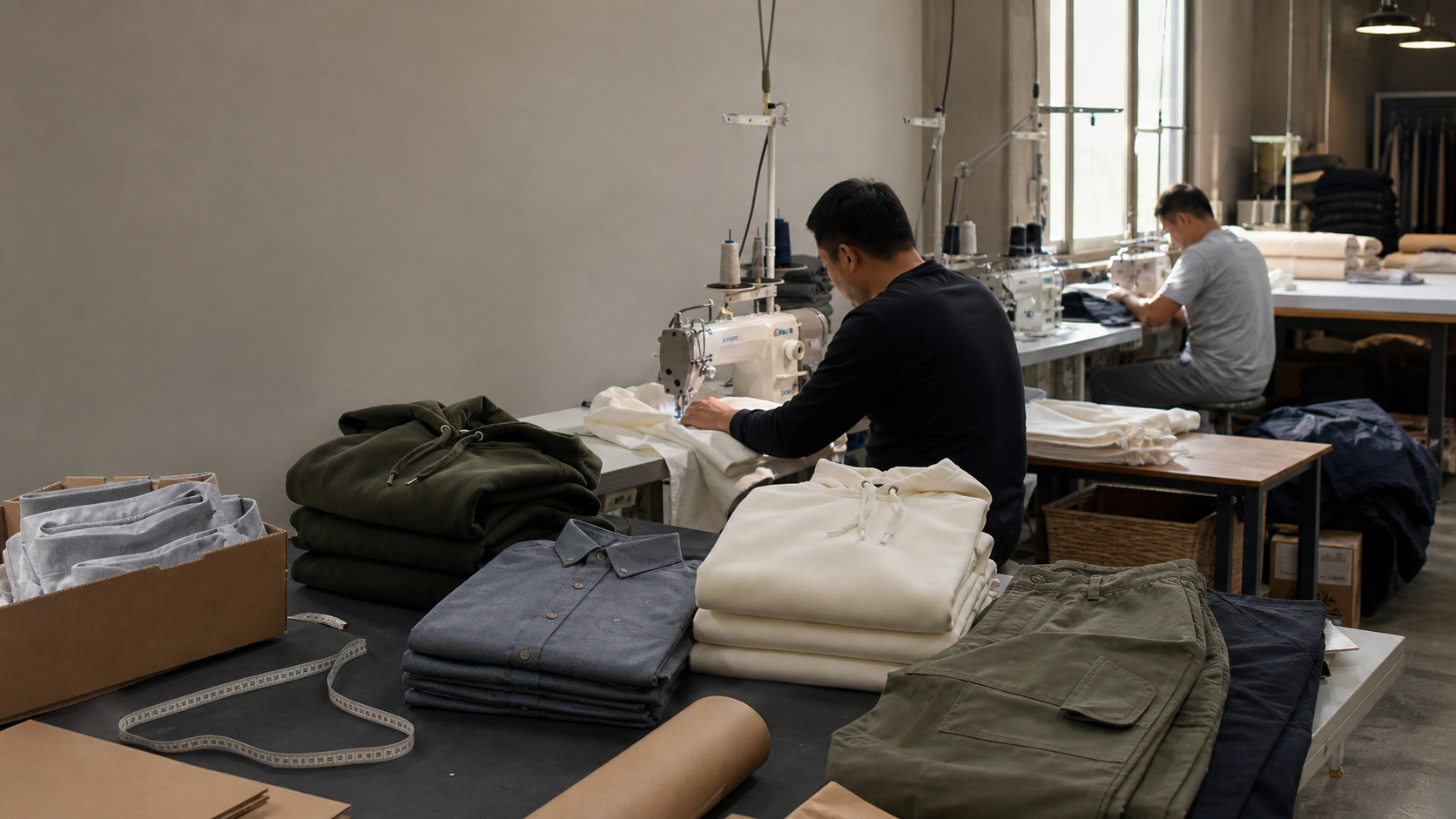
Photos, sketches, tech packs, and sample garments can all start the conversation. We will tell you what still needs to be confirmed.
We identify fabric, pattern, trim, measurement, and construction questions.
We review visible details first, then ask for missing fabric, fit, workmanship, and label information.
We check specs, BOM, size chart, construction notes, packaging, and feasibility before quoting.
We compare fit, structure, fabric hand feel, trims, labels, and production difficulty.
Photos, sketches, tech packs, samples, size charts, quantities, target price, and timing are all useful.
We review category fit, fabric, trims, construction, workmanship, MOQ, lead time, and missing details.
Before sampling, we clarify fabric direction, trims, measurements, workmanship, labels, packing, and risks.
After key details are confirmed, normal sampling takes 7-15 days.
MOQ starts from 100 pcs per style, so you can test the market before scaling up.
Approved samples, comments, packing, and checkpoints become references for the next production run.
Good sample development is not only about making one sample. It should also leave production information for the next order.
Fit, construction, workmanship, fabric, trims, and process changes are recorded.
Key measurement points are kept for shirts, hoodies, workwear, cargo pants, and oversized fits.
Fabric direction, rib, zippers, buttons, drawcords, labels, hangtags, and packing are recorded.
Approved samples, labels, folding, polybags, carton marks, and special buyer requirements are checked.
Sample comments, trim availability, size allocation, and workmanship risks are easier to handle close to the production floor.